
Before the introduction of chainsaws became widespread in agriculture and forestry, they long led a shadowy existence but were rediscovered by people who, for example, wanted to saw their own firewood without noise and fumes, apart from sporting competitions.
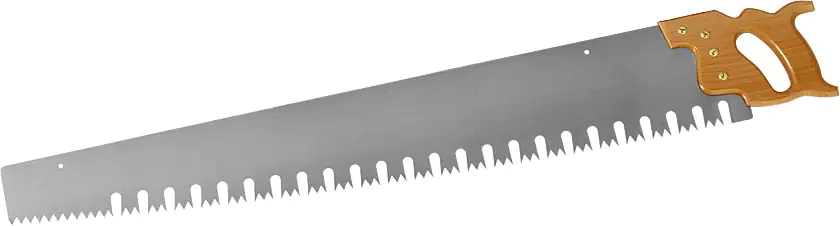
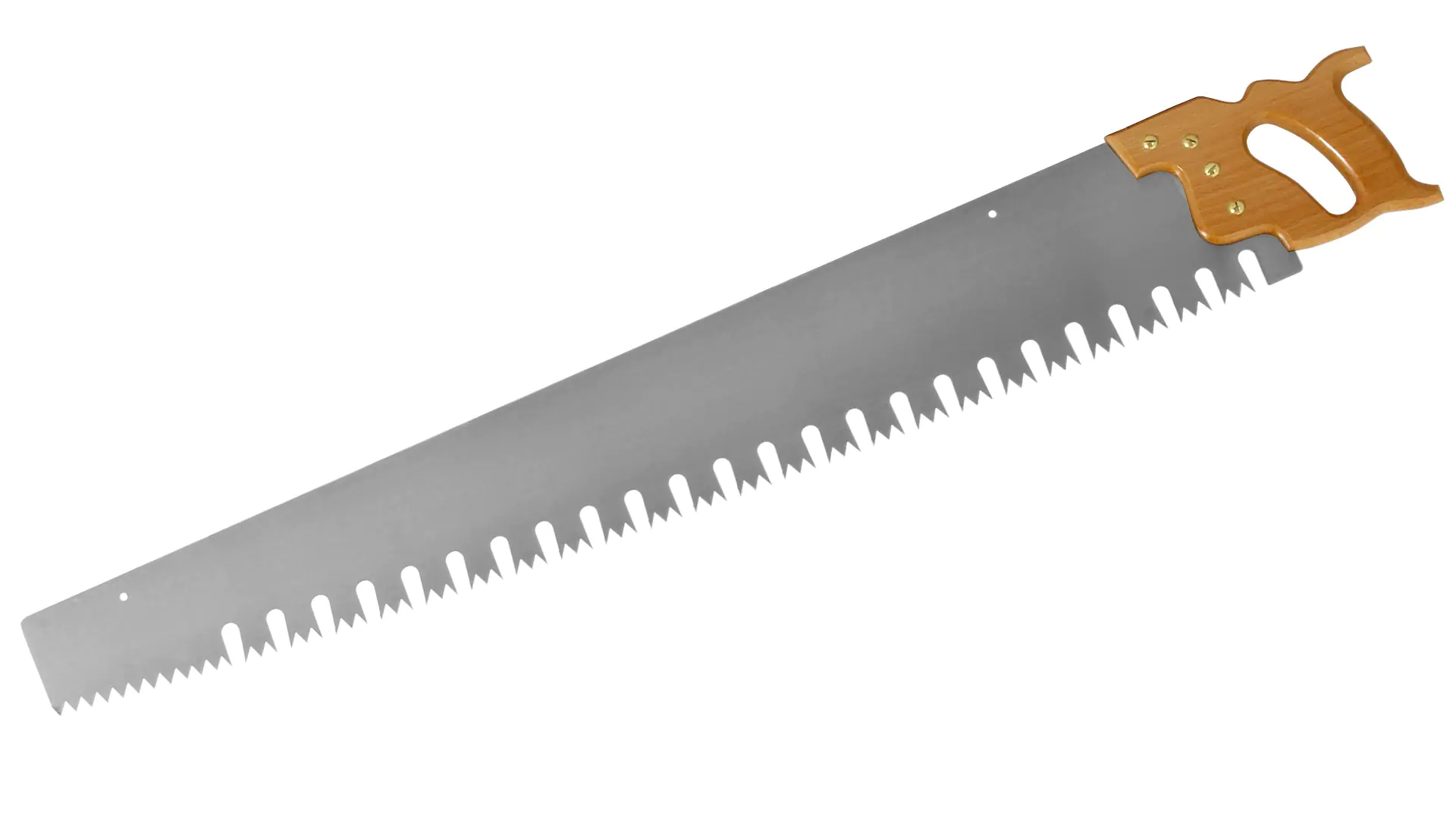
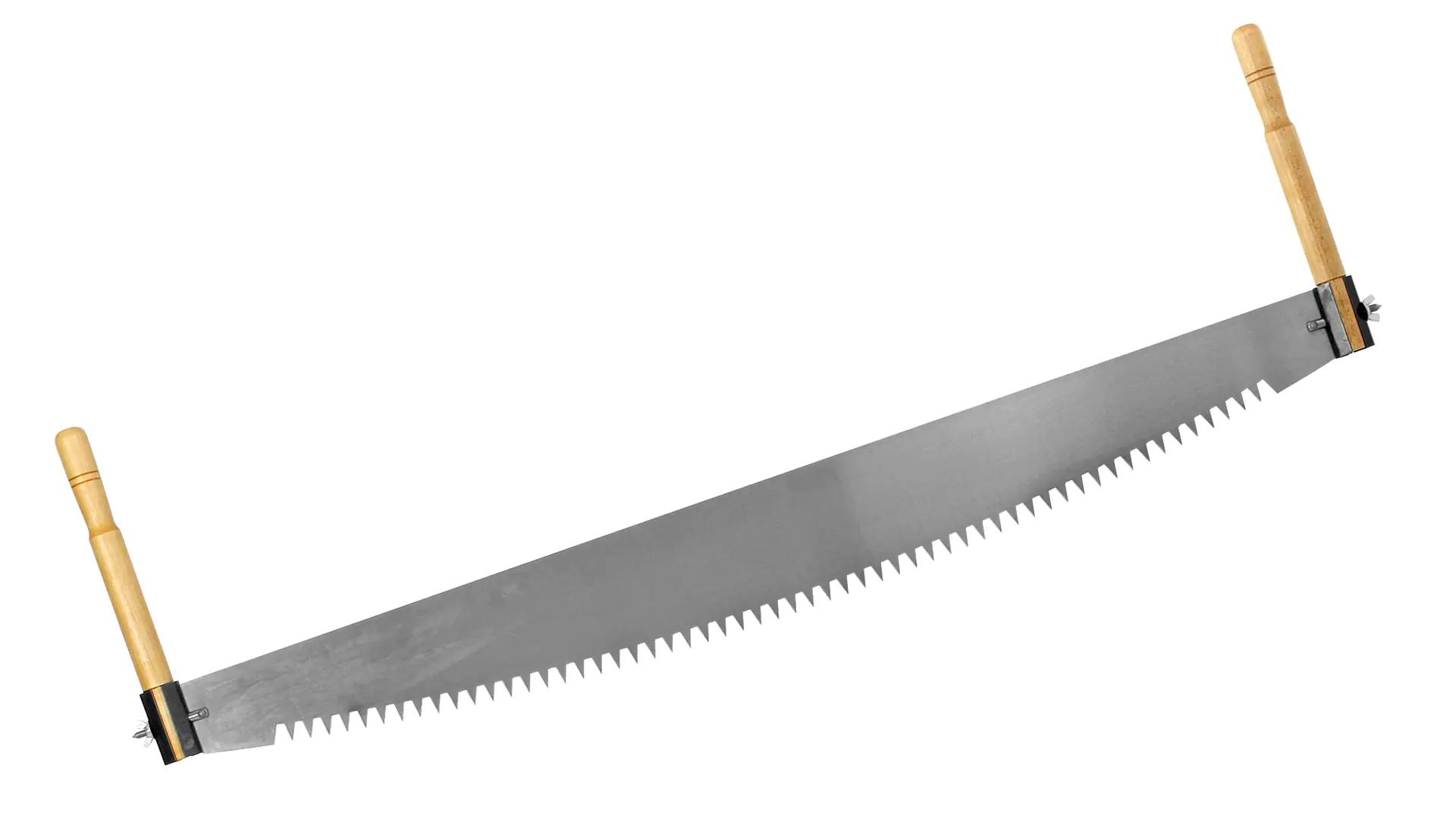
These saws feature a tooth geometry for crosscutting and are therefore not suitable for ripping logs lengthwise. The teeth are set to prevent binding in the log, resulting in a cut width that is significantly larger than the blade thickness. The teeth work both on the pull and push stroke.
A distinctive feature is their curved tooth line, which works in conjunction with the movement direction of the leading hands. Since not all teeth engage simultaneously, the work is less fatiguing, leading to quicker progress.
The pit saw is a coarse tool and thus not crafted with as much detail as, for example, carpenter’s saws. It is therefore normal for a new pit saw to still have burrs from the machine grinding process on the tooth tips. The burr often falls off during use. However, we recommend removing it with a file. Appropriate files are part of the basic equipment for every pit saw owner, as these saws frequently need resharpening.
Available, delivery time: 1-3 businessdays within Germany
Available, delivery time: 1-3 businessdays within Germany
Available, delivery time: 1-3 businessdays within Germany
Available, delivery time: 1-3 businessdays within Germany
Available, delivery time: 1-3 businessdays within Germany