
Japanese kitchen knives made of powder metallurgical steel
Although Japanese knife manufacturers adhere to traditions and rarely change anything without good reason, they are open to new ideas when they bring significant advantages and greater benefits to the user. Only then does an established company like GIHEI from Sanjo in Niigata Prefecture, which has been producing knives since 1928, explore new, promising paths.
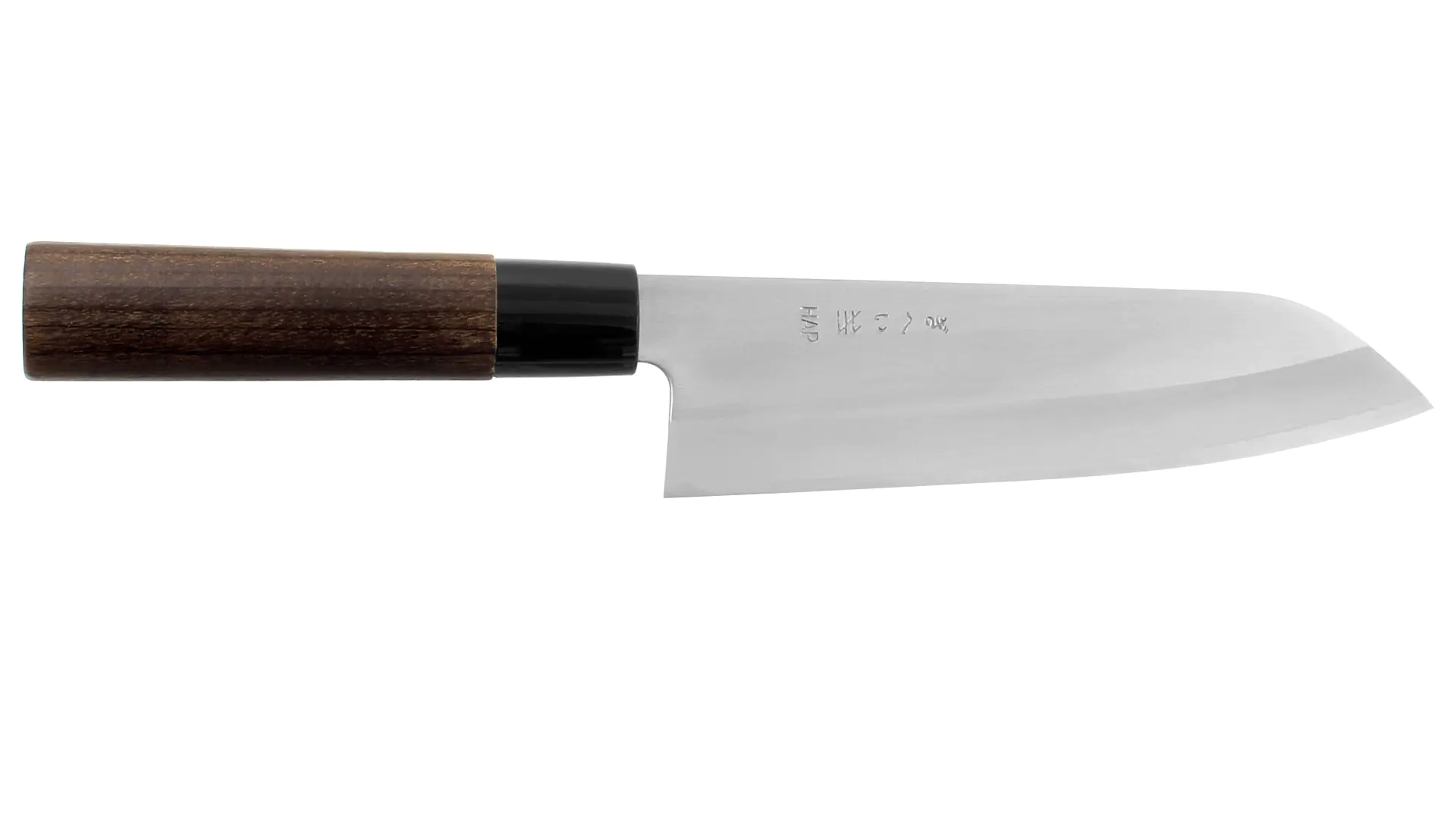
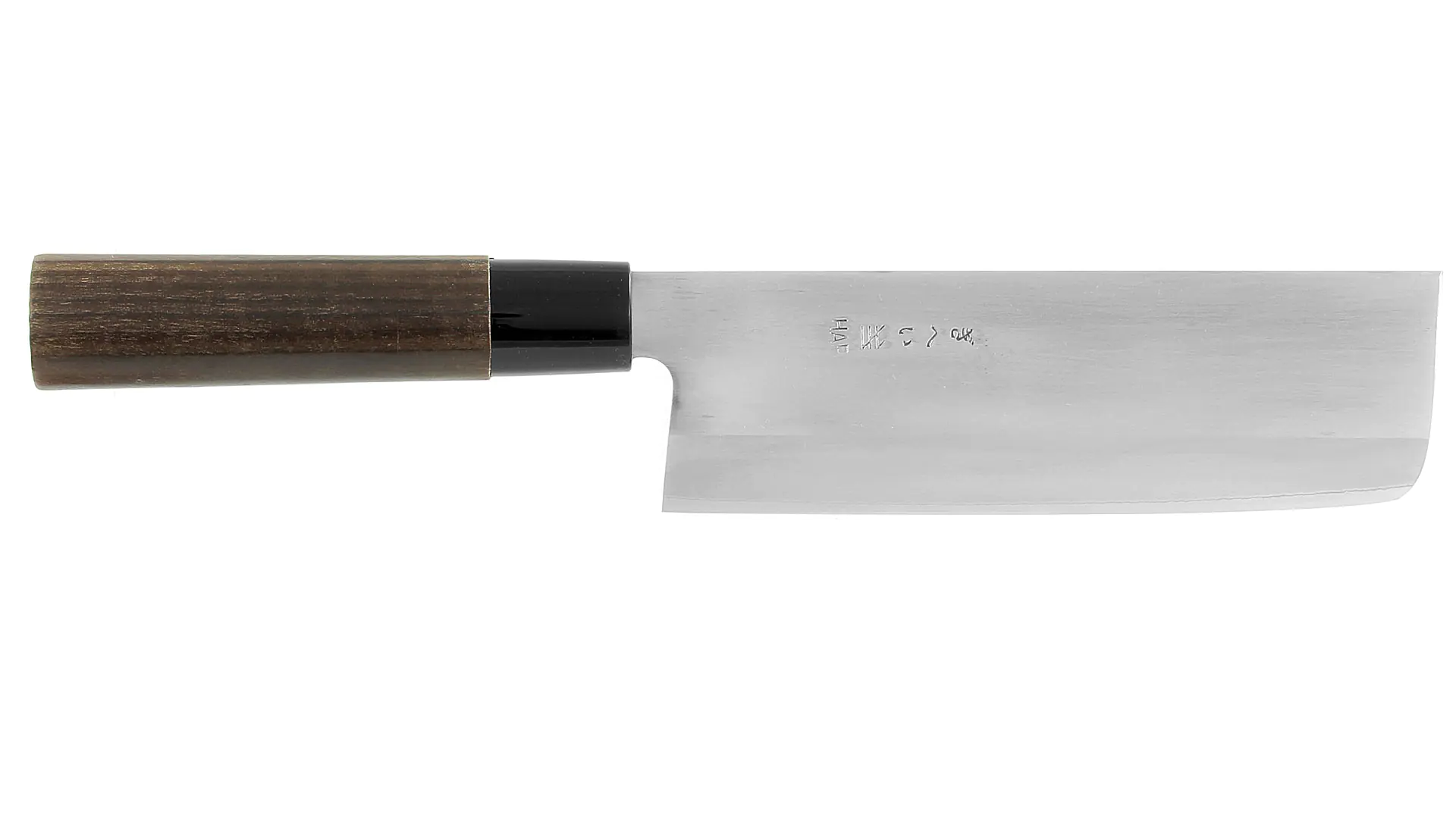
GIHEI has specialized from the beginning in the production of "Nakiri"-type kitchen knives, which are three-layer kitchen knives - either as Santoku, Kakugata, or Kengata (also called "Gyuto" or "Gyutu"). These knives were made in the traditional way, and GIHEI has a good reputation for it. The goal of the current owner, Atsushi Hosokawa, was to reconcile the excellent properties of Japanese knives, such as high sharpness, hardness, and good sharpenability, with their known disadvantages, such as edge sensitivity and susceptibility to rust, so that the "ideal" knife is created, meaning that the disadvantages are largely eliminated while fully retaining the positive properties.
Years of experimentation led to the conclusion that the use of the steel grade HAP40 from Hitachi, a powder metallurgical steel, is a significant step towards this goal. HAP40 is fine-grained enough to achieve high sharpness, can be hardened to 64 - 68 HRC (even significantly higher than traditional steels used for knives), and can be relatively easily sharpened on water stones compared to other HSS steels, although not quite as easily as traditional steels. Knives made from this steel retain their sharpness 3 to 5 times longer than traditional knives. Due to its high toughness, this steel is much less prone to chipping than the steel of traditional knives. The knives are made in three layers, and HAP40 is only used for the middle layer, the "Hagane." By using the stainless steel grade SUS405 for the "Jigane," the outer layers, the rust problem has been elegantly solved. All knives shown on this page are made from three-layer steel.
Nevertheless:
- Do not put knives in the dishwasher!
- Wash and dry after use - even stainless steel can develop rust with prolonged exposure to moisture.
- Never cut frozen items!
- These knives are intended for cutting vegetables and meat. Not for bones, poultry, or fish with bones!
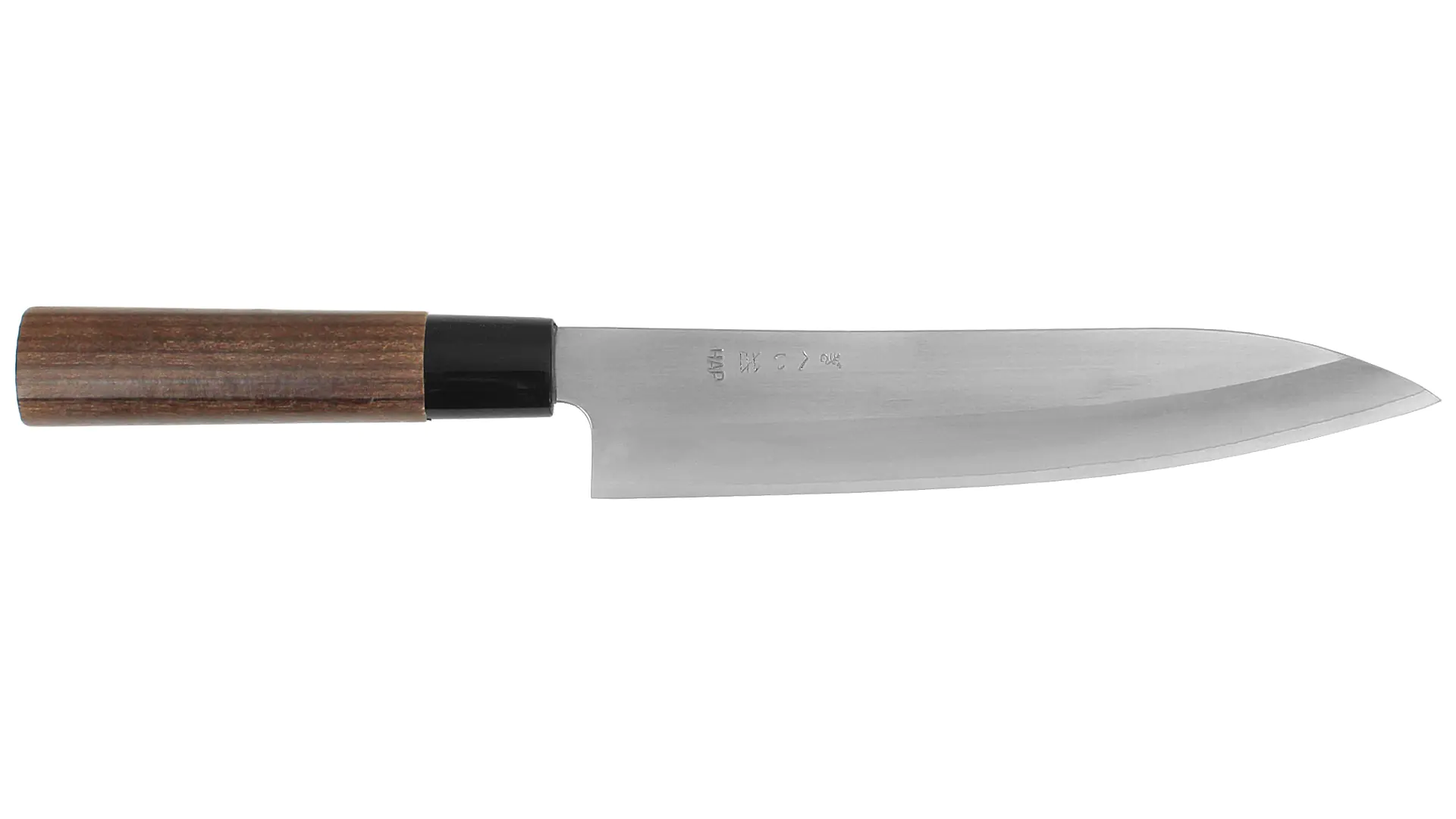
The knives shown on this page with dark, smoked magnolia wood handles have blades made from industrially pre-fabricated laminated blanks. The bolster is made of black plastic.
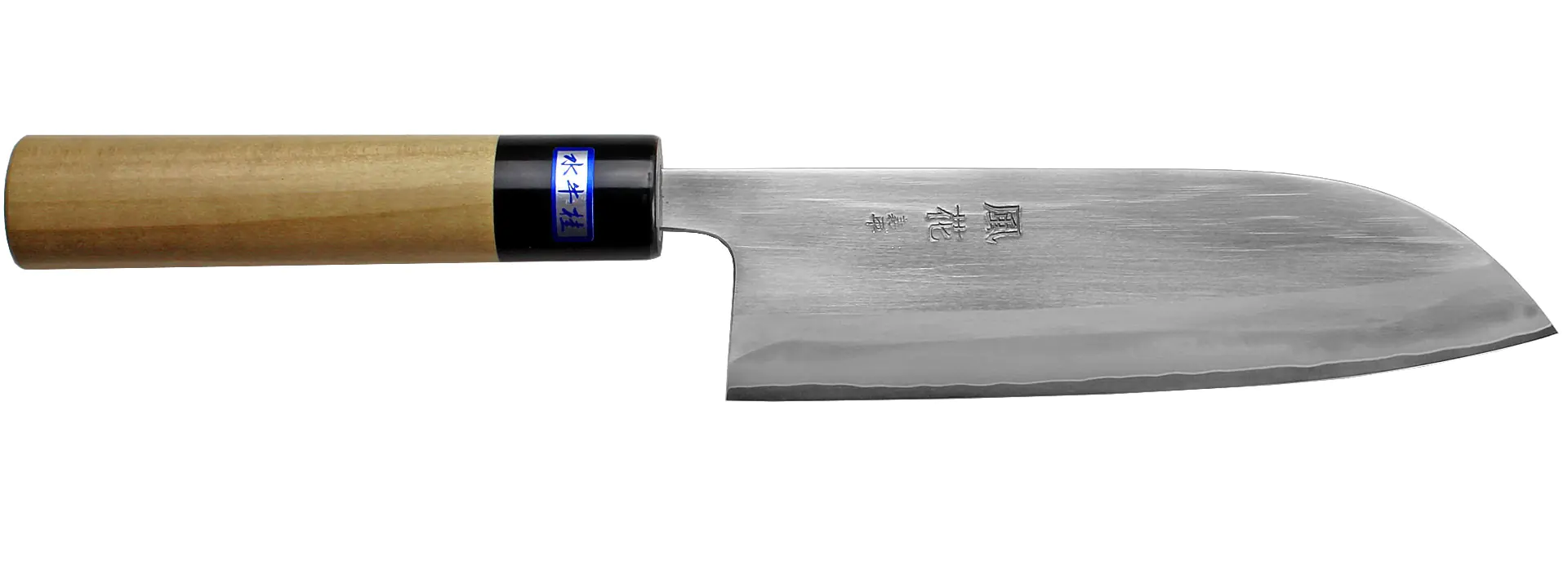
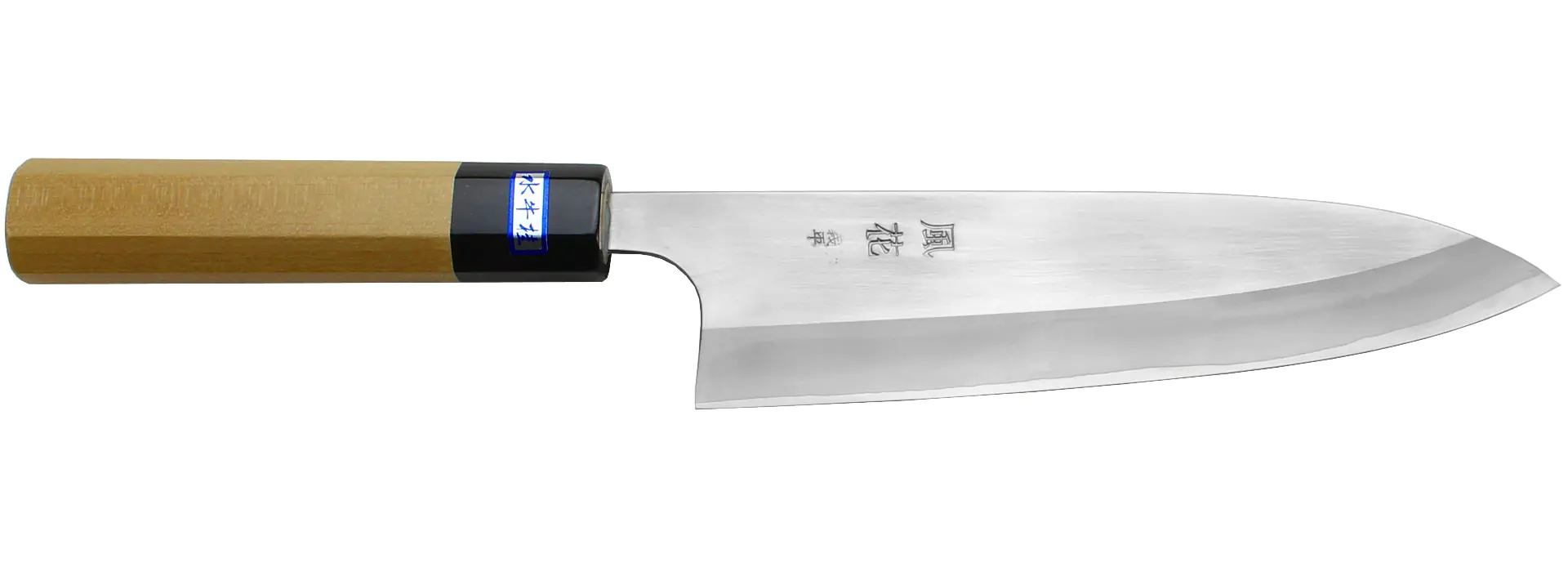
The individual layers of the blades of the two knives with light, natural-colored magnolia wood handles are forge-welded individually in a labor-intensive artisanal process at the GIHEI forge. This explains the price difference. These hand-forged knives with handles made of uncolored magnolia wood are equipped with a bolster made of water buffalo horn. This knife in its traditional form comes closest to the manufacturer's ideal conception, which is why he named it: "KAZAHANA," meaning: "dancing snow in the wind."
Mr. Hosokawa recommends using Shapton water stones for sharpening and honing these knives. However, these knives can also be sharpened on all other Japanese water stones, it just takes a bit longer.
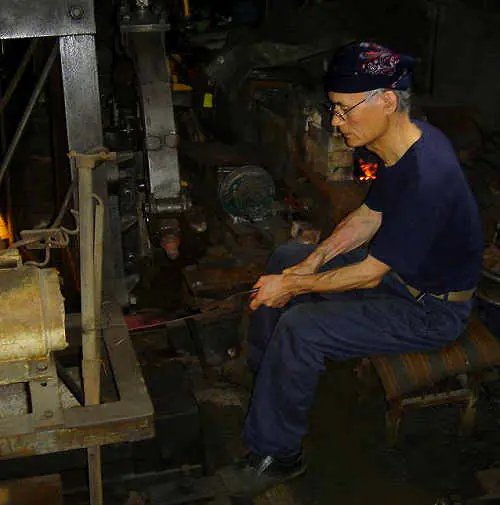
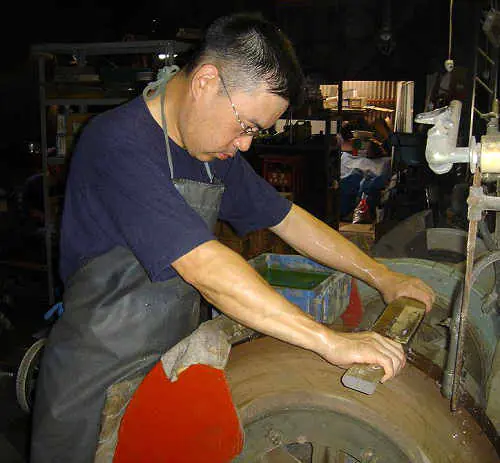
See the knife smiths Atsushi Hosokawa and Takashi Hosokawa at work!

Images from the knife forge "Gihei"
soft iron (Jigane)
Atsushi Hosokawa at the spring hammer:
His son Takashi Hosokawa at the wet grinding machine sharpening blades:
Related products
Available, delivery time: 1-3 businessdays within Germany
Available, delivery time: 1-3 businessdays within Germany
Available, delivery time: 1-3 businessdays within Germany
Available, delivery time: 1-3 businessdays within Germany

Available in 258 days, delivery time 1-3 businessdays within Germany
Available in 259 days, delivery time 1-3 businessdays within Germany